
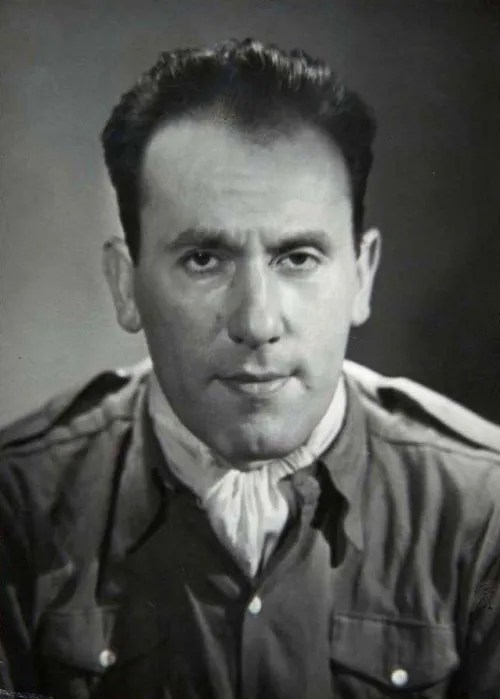

Lately I have been diving deep into the work of poet, translator, and publisher Cid Corman. This stage of the obsession has brought me back to his wonderful translations. I have already spoken of my love for his translations of Kusano Shinpei’s work, but Corman (occasionally with the help of Kamaike Susumu for Japanese texts) translated widely. He also translated the works of Basho, Francis Ponge, Maurice Blanchot, Marcel Cohen, Vallejo, Paul Celan, and René Char.
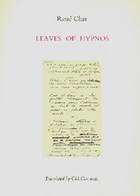
I’ve been revisiting, in particular, Corman’s translation of Char’s Leaves of Hypnos. I first came to Char through the surrealists, then returned to his work through his associations with Albert Camus and Georges Bataille. Leaves of Hypnos is a sort of poetic diary covering Char’s work for the French resistance from 1943-1944. This isn’t a standard diary, it isn’t a recounting of facts, but more a recounting of feelings. Occasionally facts do shine through, such as his retelling of watching another soldier executed and grappling with that, wondering if he should have put the village they were in at risk by shooting at the German occupiers to potentially save the soldier’s life. Two more, successive passages, exposing the truth and horrors of the second world war:
89
François exhausted by five nights of successive alerts tells me: “I’d gladly swap my saber for a cup of coffee!” François is twenty.90
They used to give names to the different portions of duration: this was a day, that a month, this empty church a year. Here we are approaching the second when death is most violent and life best defined.
In Corman’s introduction he makes an important point: “Char makes no plea for any political camp. He is selling nothing. His concern is for the people of the place to which he owes himself. He is neither hero, nor anti-hero.” Here Char is simply the poet in hell, writing a travelogue.
The entries in this book are often quite short, somewhere between diary entries and prose poems. There is scarcely a piece exceeding five sentences, and only a handful requiring an additional page of space. Many are only a single line:
46
Act is virgin, even repeated.
101
Imagination, my child.
104
The eyes alone are still capable of uttering a cry.
109
All the massed fragrance of these flowers to pacify the night that falls upon our tears.
110
Eternity is hardly longer than life.
169
Lucidity is the wound nearest the sun.
182
Lyre for interned mountains.
Char speaks to this brevity in passage 31:
31
I write briefly. I can scarcely be absent for long. To expatiate would get obsessive. The adoration of shepherds is of no use now to the planet.
Throughout the book, Char speaks on poetry and poetics, and their use. I have included those passages that directly mention the poet and the poem below. There are many, many more passages worth investigating, and many more about poetry. I highly encourage you to find a copy of this book. It can be rather pricey online as Corman’s translation is no longer in print. His translation can be found on the Internet Archive, here. I will note that Mary Ann Caws has a wonderful translation of the text included here, within Furor & Mystery and Other Writings, a bilingual edition from the phenomenal Black Widow Press, an elite source for modern translations of classic surrealist texts.
6
The poet’s effort aims to transform old enemies into loyal adversaries, every fertile tomorrow being, especially where surges forth, entwines, declines, is decimated the whole gamut of sails where the wind of continents surrenders its heart to the wind of the deeps.
19
The poet cannot long dwell in the stratosphere of the Word. He must coil up in new tears and push on even more into his order.
56
The poem is furious ascension; poetry, the sport of arid embankments.
58
Word, storm, ice and blood will end in forming a common frost.
83
The poet, conserver of the infinite faces of the living.
95
The dark depths of the Word numb me and immunize me. I don’t participate in the enchanting agony. With a stonelike sobriety I remain the mother of distant cradles.
96
You cannot reread yourself but you can sign.
98
The poem’s line of flight. It should be within the power of each to feel.
114
I’ll not write any poem of acquiescence.
132
It seems to the imagination which haunts to varying degree the mind of every creature is hardpressed to part company with it when this latter proposes to it only “the impossible” and “the inaccessible” as its utmost mission. It must be admitted that poetry is not everywhere sovereign.
154
The poet, susceptible to exaggeration, evaluates accurately when on the rack.
162
This is the epoch when the poet feels rising in him the meridian power of ascension.
165
The fruit is blind. It’s the tree that sees.
168
Resistance is only hope. Like the moon of Hypnos full tonight in all its quarters, tomorrow vision upon the passage of poems.
199
There are two ages for the poet: the age during which poetry, in all regards, mistreats him, and that when she lets herself be madly embraced. But neither is wholly defined. And the second is not sovereign.
202
The presence of desire like that of god ignores the philosopher. In return the philosopher chastises.
212
Plunge yourself into the unknown which cuts deep. Compel yourself to whirl about.
227
Man is capable of doing what he is incapable of imagining. His head ploughs through the galaxy of the absurd.
237
In the depths of our darkness there is no one place for Beauty. The whole place is for Beauty.
 Kristopher Biernat
Leave a comment